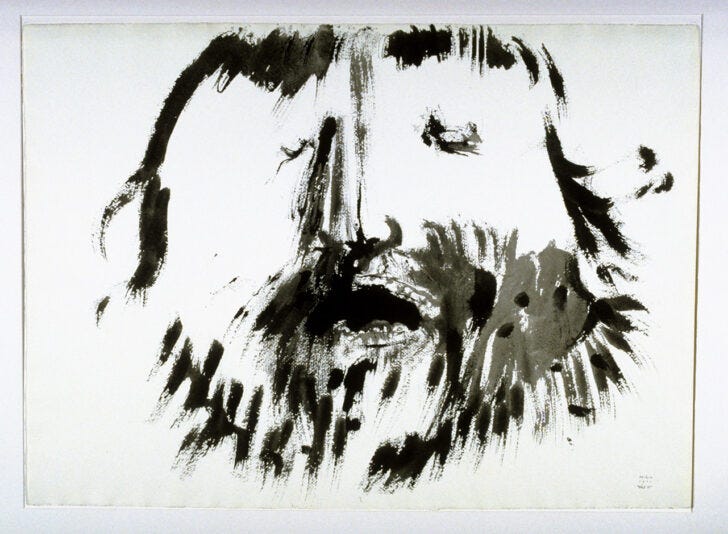
The Wolf, Part Five

And so began the cursed days for the new settlement,
And still more accursed — the nights,
For night after night, just as it struck twelve,
It was as though the wolf appeared from nowhere,
To take his place in the middle of the market
And howl until daybreak.
And everything they did to chase him away,
Only increased the wolf’s tenacity,
And his appearances became all the more punctual.

Once, they laid fires
Around the well and all the corners of the market,
And they peered out through their windows, hidden,
Hoping that the wolf would have a terror of fire.

And how great was their surprise when they saw,
That instead of fearing the fire, the wolf
Sprung into the flames and with his paws
Scattered the burning wood,
And spun in a whirling dance around them
And wrapped himself in knots of smoke and sparks:
And then sated with the dance, sprung up
Upon his usual place and commenced his howling.
And they began to understand, more than before,
That something was not right here. And their fear of the wolf
Had transformed itself into a fear of themselves.
And the wolf’s sounds took root in their hearts,
Embedded itself in their new hopes and dreams,
And resounded back out in icy, barbed, echoes...

And all kinds of tales began to go from mouth to mouth,
And spread around the whole of the region,
And stopped the new settlement from growing any larger.

But most remarkable of all to the Jews
Was that the wolf did not come near the houses,
And never once tried to roam the streets,
And aside from the first night, when he’d stretched his legs,*
And they saw that, evidently, he did not come to devour them
Nor to attack them, but for something else.

And the astonishment grew greater yet, when once
A couple of young men, the most daring, girded themselves
With axes and rifles, and went out to the market,
And hid themselves behind the rubble, and fired out with their rifles,
And the wolf, instead of springing down from the well
And fleeing, or falling upon them,
Remained standing on the low walls, as before,
And suddenly, interrupted his all noises,
Craning his neck toward where they crouched and waited…

And when the hidden ones saw his eyes,
And in the reflection of them — their waiting throats,
Their paralysed arms and legs trembled,
And they turned for home, scarcely drawing breath.
And so deeply did the terror eat into their hearts,
That it was days before they recovered.
And then all felt, it was because of something they had done,
And they stopped seeking a means to chase away the beast,
But with patient suffering and brokenness,
With sorrowful humility, received the nightly terror.

And every day and every night,
They said psalms, recited prayers, and wept.
And so in prayer and fasting they passed
The whole ten days of repentance until Yom Kippur.
* The line in italics and denoted by an asterisk does not appear in the 1940 Ale Verk publication of the poem, nor in the translations by Neugroschel or the Harshavs.